
Material Nature Risks Facing Maritime Industries and Support Available for Members on TNFD
The UK’s maritime engineering, marine science and technology, and business services industries will increasingly need to manage a variety of nature-related risks and opportunities.
Many of these may already be familiar: material nature-related issues, for example, can include building port resilience to extreme weather, while some may be only now emerging, such as addressing the significant water footprint of digital technologies.
As awareness grows of the financial impacts of nature-related risks, capital providers are also requesting more information from portfolio companies on topics like biodiversity. Engaging with the guidance of the Taskforce on Nature-related Financial Disclosures (TNFD) can help businesses in maritime industries assess, act, and report on these issues to better manage internal risk, and to support the requirements of investors and broader stakeholders.
Maritime nature-related impacts and dependencies
Maritime industries rely on natural systems across their value chains – as an illustration, ports and shipping depend on healthy marine ecosystems, predictable weather patterns, and navigable waterways. For example, some 200 million litres of freshwater per ship are needed to maintain navigable water levels in the Panama Canal - water levels that are influenced by terrestrial vegetation in surrounding areas. At the same time, operations can create significant impacts – be that through dredging, underwater noise, or seabed disturbance.
Several leading ports have already adopted nature-based solutions to address these dependencies and impacts. For example, the Living Ports Project at the Port of Vigo in Spain deployed ecologically engineered seawall panels and armour protection for riprap revetments to both meet coastal protection requirements as well as create new habitat to enhance coastal biodiversity. The project has the potential to deliver €18,750 per hectare in savings from reduced maintenance costs.
Navigating risks and opportunities
Nature-related dependencies and impacts can lead to enterprise risks and opportunities for marine industries. Digital technology providers in the marine sector could be exposed to the disruption of operations owing to changes in the availability of
water needed for cooling datacentres in their supply chains. For example, since May 2024, an estimated $64 billion worth of planned US datacentre projects have been blocked or delayed, largely owing to local concerns, including about the demand on natural resources and power.
However, leading businesses can also take advantage of nature-related opportunities. For example, increasing the use of recycled materials in manufacturing digital equipment can reduce costs linked to raw material procurement as well as exposure to natural resource price volatility.
Financial implications for maritime industries
How businesses manage these material nature-related issues will have implications for their operating costs, revenue streams, legal liabilities, and cost and access to capital. As nature‑related disclosures become more mainstream, maritime businesses that proactively manage their impacts and dependencies will be better positioned for long‑term resilience and investment readiness.
How can the TNFD guidance help?
The TNFD was launched in 2021 to develop and deliver a risk management and disclosure framework for organisations to report and act on evolving nature-related issues. Over 730 organisations have adopted the TNFD framework, representing $22.4 trillion in Assets under Management (AUM). 95 of these are UK companies and adopters from maritime industries globally include Adani Ports, Lyttelton Port Company, Port Marlborough, Odfjell SE and Port of Newcastle.
In 2023, the TNFD published its 14 disclosure recommendations and supporting guidance. It has also subsequently published sector guidance relevant for maritime industries and their supply chains, including for marine transportation and cruise lines, technology and communications, and metals and mining. Sector guidance helps businesses apply TNFD’s integrated ‘Locate, Evaluate, Assess, and Prepare’ (LEAP) approach for the assessment of nature-related issues.
Drawing on the recommendations and guidance of the TNFD, the International Sustainability Standards Board (ISSB) has begun a standard-setting process on nature-related risks and opportunities. An exposure draft of incremental disclosure requirements is expected by October 2026.
To build internal capacity before nature disclosures are mandatory, UK businesses in maritime industries can get started by engaging with the TNFD framework. Support is available to all Society of Maritime Industries members through the Green Finance Institute (GFI).
Support available through the TNFD UK Consultation Group
The GFI leads the TNFD UK Consultation Group, where it works directly with UK companies to help them explore the business case for getting started on nature and what practical first steps could look like. This initiative is funded by the UK government to provide free support to UK businesses. Please reach out to if this is an area you are exploring; the team would be pleased to discuss anything you might find useful at this stage. You can also sign up to the TNFD UK Consultation Group for UK-based updates and events.
News
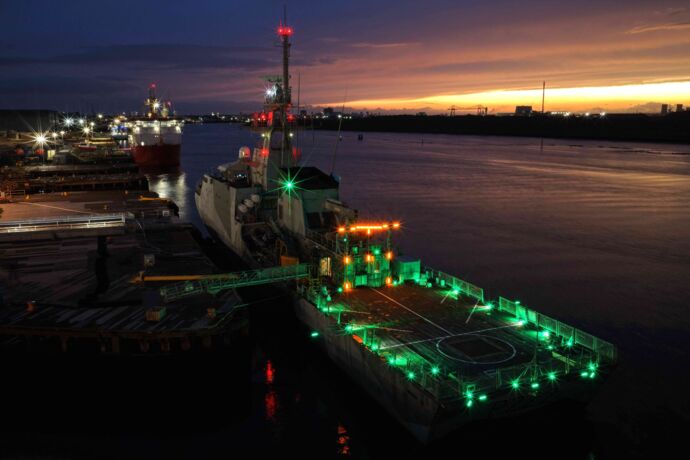
Innovative helicopter landing system installed on third Royal Navy ship at UK Docks
UK Docks Marine Services has helped install an advanced Heli Deck Lighting System on the Royal Navy's HMS Forth, improving helicopters' ability to…

Member Zone
If your company is a member of the Society of Maritime Industries a number of resources are available for which a log-in is required.
LoginResources
Access a wide range of documents, consultations and newsletters which we feel will aid your business activities.
Become a member
We promote the interests of UK based companies in the international market place and to governments
Join Us See the BenefitsNewsletter Signup
Keep up to date with all the latest news and events with our regular newsletter delivered straight to your email box.
Sign Up NowMarine Autonomy Challenge (MAChallenge)
This exciting biennial challenge is open to teams of students studying at UK universities.
Learn more