
SMI Council Leadership Spotlight: Adam Dennett
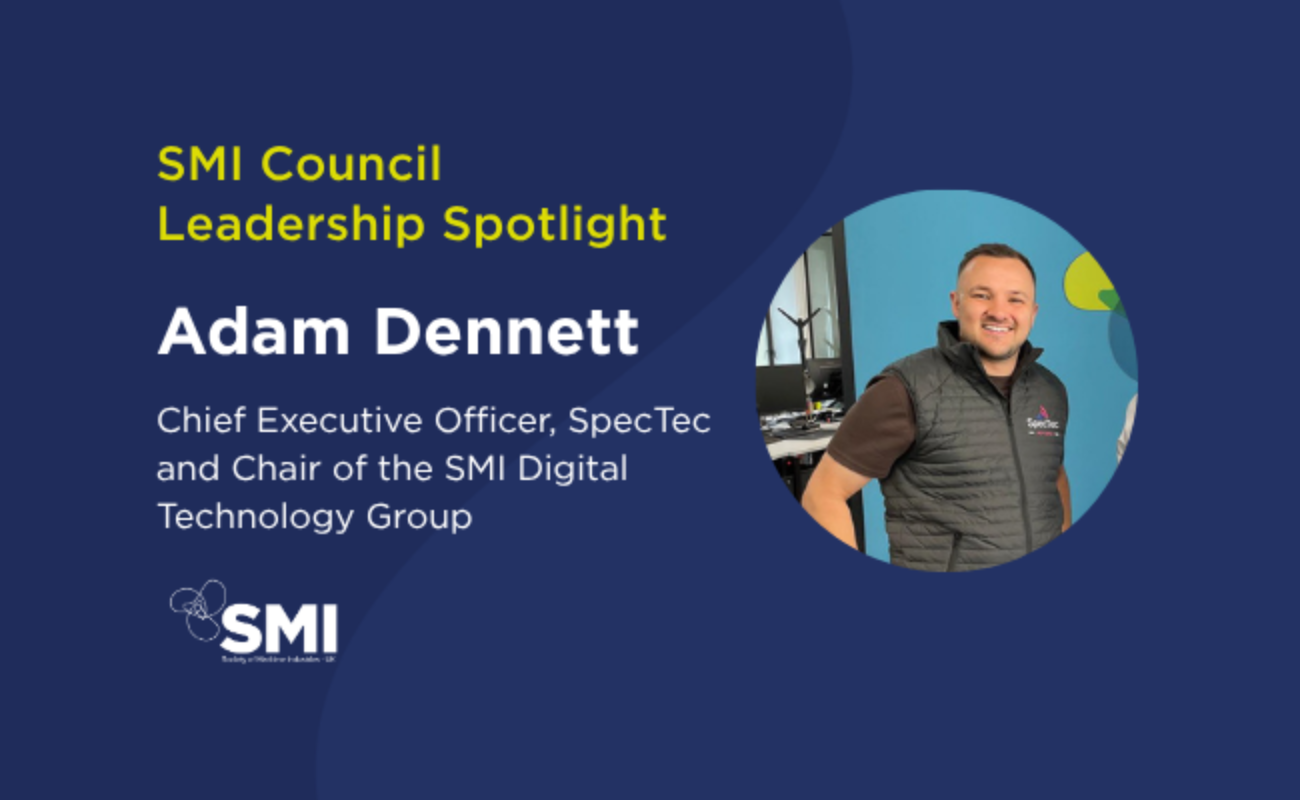
Our spotlight series on the people behind SMI's Councils continues with Adam Dennett, Chair of SMI's Digital Technology Group and CEO of SpecTec. Adam came to maritime in 2024 after a career leading software business in other sectors. In this interview he reflects on why data, rather than technology, is now the barrier to digitalisation, how the DTG's programme of workshops and site visits puts operators and technologists in the same room to have real, candid discussions around business growth and improvements and what he would say to the next generation considering a technology career in maritime. Read the full interview below.
About you
Can you tell us about your current role and the work your company does within the maritime sector?
I'm the CEO of SpecTec. We build AMOS, the asset management software behind the day-to-day running of vessels all over the world. Maintenance, procurement, spares, compliance, crewing: the unglamorous work that keeps ships safe, certified and earning.
The business turned 40 last year, born in Norway in 1985, and today we're a global team headquartered in Manchester, UK, working with everyone from small owner-operators to some of the largest fleets afloat.
What drew you to this particular area within the maritime sector as your area of focus and what keeps you passionate about it?
Honestly, maritime found me rather than the other way round. I joined SpecTec in May 2024 after a career leading software businesses in other sectors, most recently healthcare. A month into the job I was at Posidonia in Athens, and that week did it for me. The scale of this industry, and how invisible it is to most people, is extraordinary. Almost everything we own has been on a ship at some point, yet the people and systems behind that rarely get noticed.
What keeps me passionate is the gap. The distance between what digital technology can already do and what most vessels actually use day to day is bigger in maritime than anywhere else I've worked. That's not a criticism, it's an opportunity, and it's a genuinely exciting time to be part of closing it.
What's the most significant shift you've seen in commercial maritime over the course of your career, and how has that changed the way the sector operates?
I'll leave the fifty-year perspective to others. What I bring is a fresh pair of eyes from outside the industry, and sometimes that's useful. The thing that strikes me is how quickly the conversation has moved from whether to digitalise to how. Nobody serious is debating the case anymore.
The shift within that is where the barrier now sits. It's no longer the technology, it's the data. Every fleet I speak to has systems that don't talk to each other, data trapped in different formats, and crews asked to feed dashboards rather than being helped by them. Fix the data and the technology mostly takes care of itself.
And then there's AI. In two years it has gone from conference keynote material to something I personally use every single working day. That pace of change is unlike anything I've seen in my career.
About the Council
What are your priorities for the DTG Council right now?
When I took the chair, we agreed as a council that what we wanted was fewer formal meetings and more time solving real problems. So, working with Bruce Clements and the SMI team, we've built the year around workshops and site visits where members get hands-on with technology and, crucially, where operators are in the room telling technologists what they actually need. We've been inside BMT's new simulation centre, on the factory floor with GE Vernova looking at augmented and virtual reality, and we have data and cyber-focused visits ahead.
The other priority is planning further out. We're shaping a full 2027 programme around the themes members tell us they want to explore: data connections, digital engineering, AI, quantum sensing, cyber. The agenda belongs to the members, not the chair.
Why is the kind of cross-industry collaboration that SMI facilitates so important, particularly at a time when maritime is facing challenges around sustainability, technology and skills?
Because none of the big problems in maritime digitalisation can be solved by one company, however good they are. Take data standardisation, which comes up as the number one priority in almost every session we run. No single vendor, owner or class society can crack that alone. It only moves when technologists, operators, academia and government sit around the same table.
The same is true of cyber resilience, of building the confidence needed to make decarbonisation decisions, and of attracting talent. SMI is one of the few places where all of those people are genuinely in the room together, and where the conversation is honest because nobody is selling.
Can you share a project, initiative, or moment from your Council work that you're particularly proud of?
A workshop earlier this year, where we put a vessel operator in front of a room full of technologists. Small fleet, small team, completely unfiltered. The line that stuck with everyone: stop giving me dashboards and spreadsheets, give me intelligence. You could see the penny drop around the room. That's what the DTG should be for. Not admiring technology, but hearing what the people running ships actually need, and we've built the whole programme in that spirit since.
I'd also pick out our visit to BMT's new Digital Innovation Centre before it had even officially opened, where we watched a reconstruction of the Baltimore bridge incident on their simulator. Moments like that make people rethink what's possible.
How does the Digital Technology Group help turn industry challenges into practical outcomes, whether through engagement with government, shipowners, or international markets?
A few ways. We fed directly into national work like the UK Maritime Technology Roadmap, where we contributed to the digitally enabled productivity goal, and we engage with the National Shipbuilding Office, the Department for Business and Trade, Innovate UK and the Catapults so members can see and shape what's coming.
We run practical sessions on innovation funding so smaller members don't miss deadlines they never knew existed. And our visits and workshops regularly create real commercial connections. Members telling us they've picked up conversations, partners and opportunities they would never have found otherwise is the truest measure of value.
Looking ahead
Where do you see the biggest opportunities, and challenges, for the UK commercial maritime industry in the next five to ten years?
The opportunity is enormous. The UK has a genuinely world-class maritime technology community, and the next decade belongs to whoever helps this industry turn its data into decisions. AI and predictive operations, digital engineering, cyber resilience, the digital confidence needed to make decarbonisation investments stick: UK companies are strong in all of them, and this is a market the whole world needs.
The challenges are the mirror image. Fragmented data and the lack of common standards hold everything back. Cyber threats grow as connectivity grows. And, like every part of maritime, we need to convince brilliant young people that this is a technology industry with a global canvas, not an old-fashioned one.
What would you say to a business considering getting more involved in SMI and more specifically the Digital Technology Group?
Come to one workshop. That's it, that's the pitch. Don't wait until the timing is perfect or you've worked out the return on investment. Just come and sit in a room where operators, technologists, academics and government speak candidly about real problems.
If you're a digital business trying to break into maritime, or a maritime business trying to work out digital, I can't think of a faster shortcut. It pays for itself the first time someone saves you six months by telling you what didn't work for them.
What advice would you give to the next generation of professionals entering the maritime sector and what qualities do you most value when you encounter them?
Don't let anyone convince you this industry isn't for you. I was the first in my family to go to university. My mum was a cleaner and my dad drove buses, and I've ended up leading a global software company and chairing a national industry group. Background is not destiny.
Second, maritime is now a technology career. If you're into AI, data, robotics, simulation or cyber, this industry will hand you problems at a scale most sectors can only dream of, and it will notice you faster because it needs you more.
As for qualities: curiosity and graft. The people who stand out are the ones who ask the question everyone else was avoiding, then actually go and do something about the answer. One of my favourite sayings is that no is fundamentally not an answer to a question about progression. Bring that attitude and maritime will reward you.
News
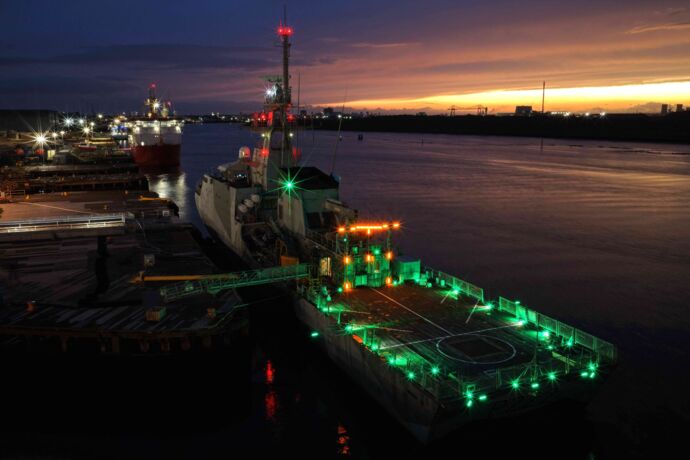
Innovative helicopter landing system installed on third Royal Navy ship at UK Docks
UK Docks Marine Services has helped install an advanced Heli Deck Lighting System on the Royal Navy's HMS Forth, improving helicopters' ability to…

Member Zone
If your company is a member of the Society of Maritime Industries a number of resources are available for which a log-in is required.
LoginResources
Access a wide range of documents, consultations and newsletters which we feel will aid your business activities.
Become a member
We promote the interests of UK based companies in the international market place and to governments
Join Us See the BenefitsNewsletter Signup
Keep up to date with all the latest news and events with our regular newsletter delivered straight to your email box.
Sign Up NowMarine Autonomy Challenge (MAChallenge)
This exciting biennial challenge is open to teams of students studying at UK universities.
Learn more